
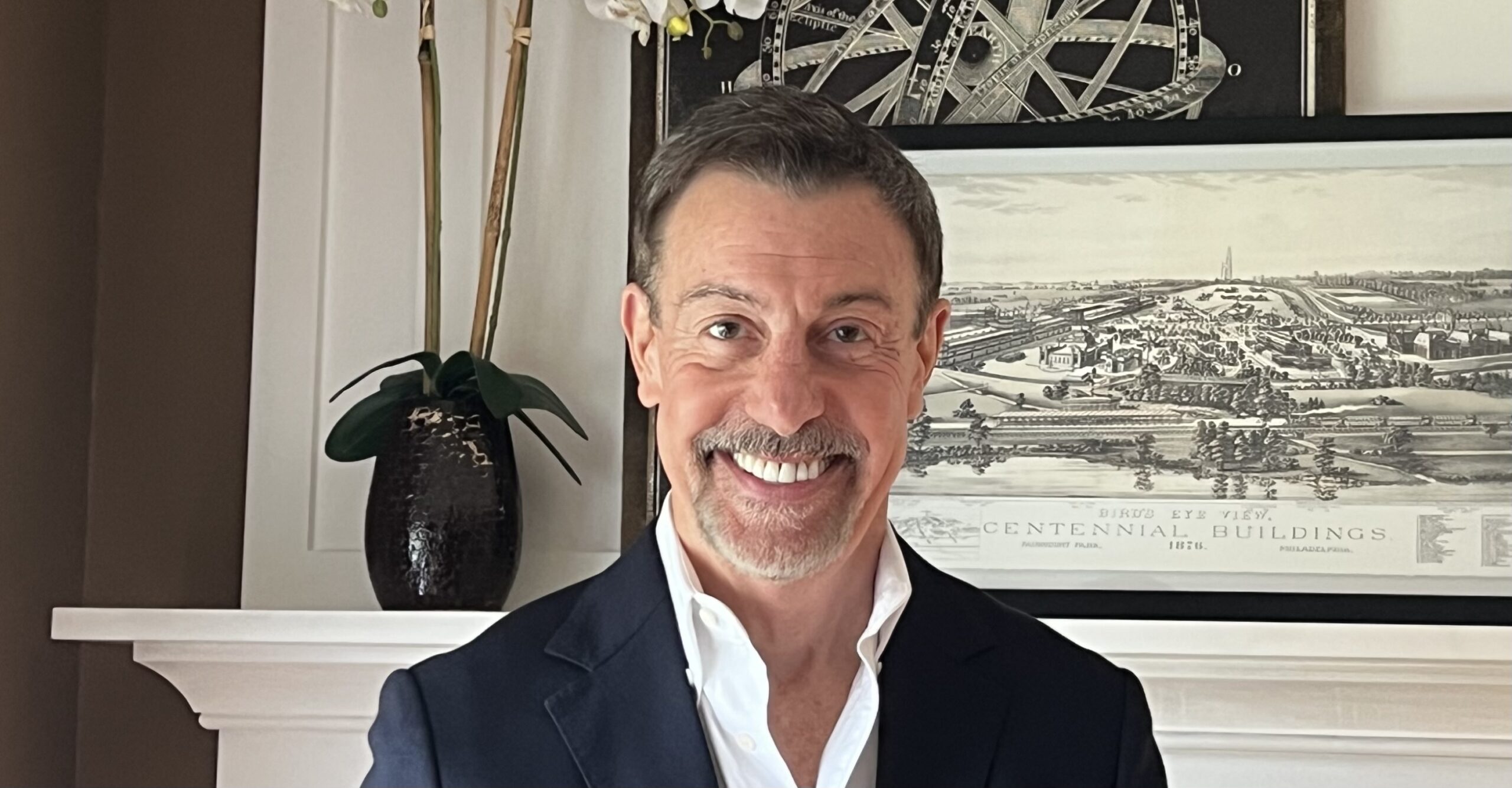
Technically, you are supposed to grow a mustache for Movember, the global campaign for men's health and preventive care. But at Cooper University Health Care, our leadership team decided that any facial hair would suffice to promote conversation and spread the word.
The logic was simple: If a group of executives known for their clean-shaven faces suddenly began to sport facial hair, somebody would notice and ask questions. When speaking to groups of people, as would often be the case, the facial hair on these men would again trigger the need for an explanation, presenting another opportunity for advocacy. It was the perfect setting with the right messengers. A simple yet significant statement that could literally save lives.
- MORE FROM LOUIS BEZICH
- Madison Avenue is making bromances cool. Can that spur improvements in men's health?
- Male views on masculinity are gradually shifting — and that's good for their mental health
- No matter your age, it's never too late to reap the benefits of a healthy lifestyle
- Fall is a great time to give running a try, with a range of races in the Philly region
For more than 20 years, Movember has sought to trigger conversations about men's health by encouraging men to grow mustaches (or in our case, any type of facial hair). It's grown to a worldwide headcount of 6 million participants.
This year, that figure included many of us at Cooper. The male members of our leadership team committed to show our support and use our platform to advance the state of men's health. We were all in.
The origins of Movember
Today, the Movember Institute Foundation of Men's Health has a global reach that accelerates research designed to provide practical solutions to important issues such as mental health, prostate and testicular cancer, gender-specific health care and men's health literacy, but its origins were extremely modest and much less formal.
Movember was started in 2003 in Melbourne, Australia, by Travis Garone and Luke Slattery over a beer as they considered the declining popularity of mustaches. Their conversation produced a challenge to their friends to grow mustaches during November to promote the return of this classic style. It drew 30 participants. They soon realized the mustache could spark conversations about men's health issues, particularly prostate cancer and depression. The movement was born.
Now, Movember is a worldwide effort anchored principally in Australia, Canada, the United Kingdom and the United States. Through the Institute, almost $1 billion (Australian dollars) has been invested in men's physical and mental health efforts, including research, health literacy and the promotion of effective strategies for enhancing men's health.
Our experience at Cooper
The genius of the "mustache model" becomes apparent very quickly. For me and my colleagues, it started in the office. In just a few days people noticed the facial hair among us and started asking questions, with every inquiry creating an opportunity to advocate for men's health.
Whether it came from a man or woman, the central message was the same: Get a checkup, get tested or encourage the men in your life to do so. Yes, there were jokes about the quality of our respective efforts, and debate as to whether any of our mustaches, beards or goatees enhanced or detracted from our appearances. With a lot of fun and laughter, we made our point and got people thinking. But the genius was to be found in many more places.
At Veterans Day, I found myself serving as master of ceremony at a couple of ceremonies — with a few of my colleagues in the audience and speaking at the events. Another opportunity. With several of us diverting from our normal appearances, the faces of the attendees made it clear that there was a strong suspicion that some collective effort was in play. They were right! Sensing the need for an explanation, I jumped on the opportunity to disclose the Movember movement and offer a quick pitch for men's health. The message was well received and, in one case, spurred a surprisingly strong and welcomed reaction.
At one of the ceremonies, a congressman began his remarks with a commentary about the importance of men's heath and the challenge of getting men to adopt healthy behaviors. His remarks were spot on and appropriate for the number of older men in the audience. Wow, I thought. Here was a congressman picking up on what was a brief comment at the start of our program, but clearly, it was a point he felt compelled to embrace. Talk about a conversation starter. To say the least, it was a great supplement to the core message honoring our veterans, and a significant point that demonstrated the power of the mustache.
A case study in social support
The Movember movement is a case study demonstrating how social support can influence behavior change and sustain that change. It is well-established that strong social support is important for the maintenance of behavioral health change. Though women have larger support networks, social support is important for both men and women and is linked to better health outcomes. The behavioral science behind Movember has elements of what psychologists call extrinsic and intrinsic motivation which demonstrates how the movement can influence the adoption of positive health behavior.
Extrinsic motivations stem from external rewards or influences, like feeling good about joining friends to promote men's health. Intrinsic motivations often are considered the stronger of the two, because they represent internal inspiration. Your actions make you happy and are fulfilling. What's critical to recognize is that external factors, like the supportive environment created by Movember, can influence and enhance intrinsic motivation, prompting men to maximize their motivation, drive, and overall satisfaction. Not a bad outcome.
Inspiration for men
In the portfolio of organizations and movements supporting men's health, Movember may be the more tenured program, but others are out there.
No-Shave November started in 2009 as a Facebook campaign in memory of Matthew Hill, a father in Illinois who died from colon cancer in November 2007. The organization's mission is to raise money for cancer education and awareness by asking men to grow their hair and pledge the money they'd normally spend on grooming to support the cause. In 2024, No-Shave November was rolled into a partnership with Fight Colorectal Cancer. Like Movember, No-Shave promotes a sense of community and purpose.
There's nothing more personal to us than our health, and that's why I found the Movember movement so fascinating. The repetition of personal and social reinforcement was striking. Every morning, I was reminded of the importance of the movement when I looked in the mirror at my goatee. My days were filled with conversations and obligatory explanations — which I was happy to provide.
As the month comes to an end, I'm looking forward to my shave on Monday morning. Though my facial hair may be gone, the lesson of Movember 2025 will be with me forever, because it showed me the power of purpose and how that power can be leveraged when we all come together. It's a lesson that we all can apply in our own efforts to live healthy.
Louis Bezich, senior vice president and chief administrative officer at Cooper University Health Care, is author of "Crack The Code: 10 Proven Secrets that Motivate Healthy Behavior and Inspire Fulfillment in Men Over 50" and "Saving Men From Themselves: 20 Proven Tactics with a New Approach to Healthy Living for Men Over 50." Read more from Louis on his website.
Have any thoughts?
Share your reaction or leave a quick response — we’d love to hear what you think!
-
 0
0
-
 0
0
-
 0
0
-
 0
0
-
 0
0
-
 0
0