
Catching and treating a common sleep disorder early may help prevent Parkinson's disease, a new study shows.
Parkinson's is a progressive neurodegenerative disorder that causes tremor, stiffness, slow movement, as well as sleep and mental health issues. About 1.1 million people in the United States have Parkinson's with the number expected to rise to 1.2 million by 2030, according to the Parkinson's Foundation.
MORE: The brain has 5 stages, but 'adulthood' doesn't begin until age 32, scientists say
Obstructive sleep apnea, a sleep disorder affecting approximately 30 million people in the United States, occurs when throat muscles relax, causing people to temporarily stop breathing and briefly wake up as many as five times an hour throughout the night.
A study published Monday in JAMA Neurology describes a link between untreated sleep apnea and Parkinson's that may help identify those with the highest risk for the neurological disease, which has no cure.
Using health data collected between 1999 and 2022 from more than 11 million U.S. veterans, researchers found that about 14% of them were diagnosed with sleep apnea. Six years after being diagnosed, the veterans with untreated sleep apnea were almost twice as likely to have Parkinson's than those who got treatment, according to the study.
Having sleep apnea is "…not at all a guarantee that you're going to get Parkinson's, but it significantly increases the chances," the study's co-author, Dr. Gregory Scott, said.
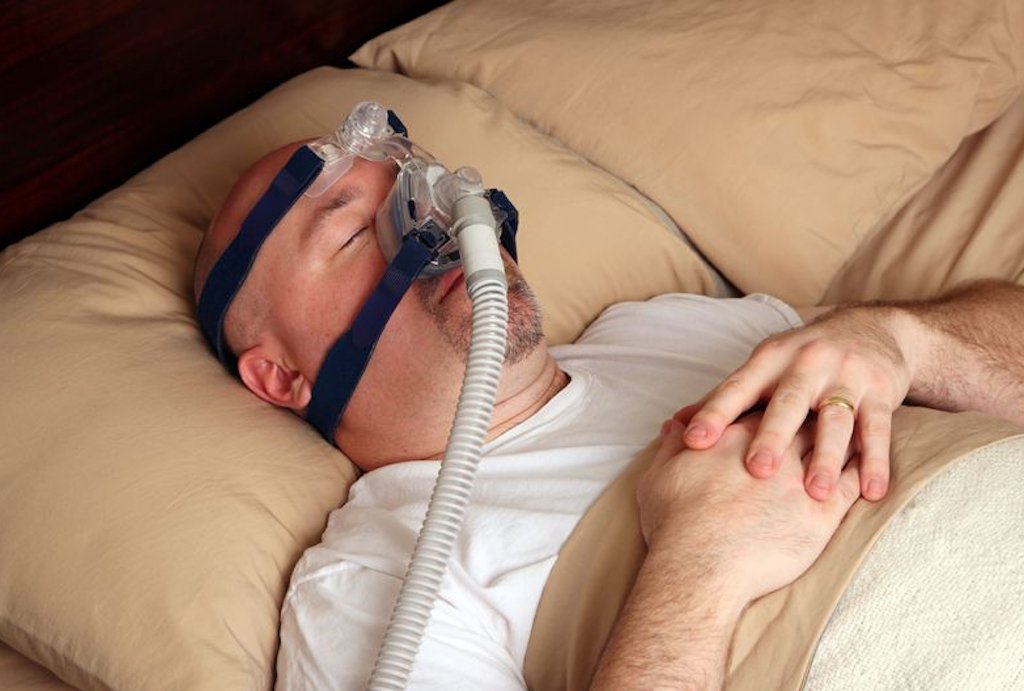
Conversely, treating sleep apnea with a continuous positive airway pressure – or CPAP – machine seems reduce the risk of developing Parkinson's, researchers found. A CPAP machine blows air through a tube into a mask that fits over the face to keep airways open during sleep.
"If you stop breathing and oxygen is not at a normal level, your neurons are probably not functioning at a normal level either," the study's lead author, Dr. Lee Neilson, said. "Add that up night after night, year after year, and it may explain why fixing the problem by using CPAP may build in some resilience against neurodegenerative conditions, including Parkinson's."
Have any thoughts?
Share your reaction or leave a quick response — we’d love to hear what you think!
-
 0
0
-
 0
0
-
 0
0
-
 0
0
-
 0
0
-
 0
0