
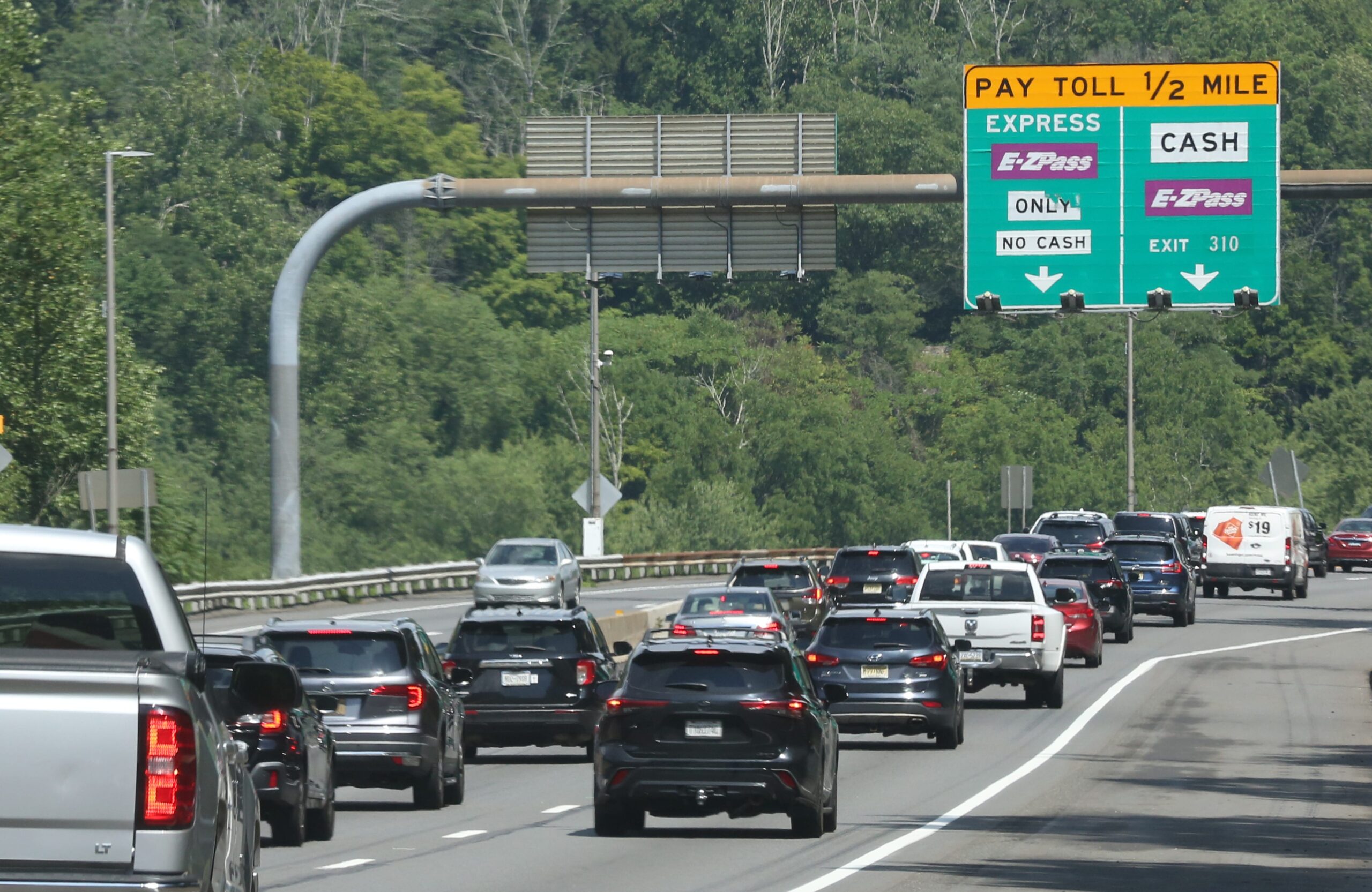
Drivers will start seeing increased tolls on eight bridges that cross the Delaware River next year.
The Delaware River Joint Toll Bridge Commission, which owns and operates 20 bridges between New Jersey and Pennsylvania, announced on Monday that it approved a rate structure that will raise toll prices by between $0.50 and $3, depending on the type of vehicle and method of payment used. The hikes will take effect "on or about Jan. 1," and a firm start date will be announced in December.
MORE: More people to travel for Thanksgiving this year than in 2024
E-ZPass rates for two-axle vehicles less than 8 feet high will go up 50 cents to $2. The same vehicle without an E-ZPass will see a $2 increase to $5. Per-axle rates for passenger vehicles that are over 8 feet in height like buses and trucks will rise $2 to $6.50. Similar vehicles without an E-ZPass will go up $3 to an $8 per-axle rate.
Structures in the Philadelphia area operated by the Delaware River Port Authority like the Ben Franklin Bridge charge a $6 toll per passenger vehicle.
The eight toll bridges that will be subject to the rate increases are:
• Trenton-Morrisville (Route 1), connects Morrisville, Pa., to Trenton, N.J.
• Scudder Falls (I-295), connects Lower Makefield, Pa., to Ewing, N.J.
• New Hope-Lambertville (Route 202), connects Solebury Township, Pa., to Delaware Township, N.J.
• I-78, connects Northampton County, Pa., to Warren County, N.J.
• Easton-Phillipsburg (Route 22), connects Easton, Pa., to Phillipsburg, N.J.
• Portland-Columbia (Routes 611, 46 and 94), connects Portland, Pa., to Columbia, N.J.
• Delaware Water Gap (I-80), connects Stroudsburg, Pa., to Mt. Hermon, N.J.
• Milford Montague (Route 206), connects Pike County, Pa., to Sussex County, N.J.
The increases, first proposed in July, were implemented to fund transportation infrastructure projects and improvements within the governing body's jurisdiction and to offset rising construction-industry costs, the commission said Monday. Tolls, which are only collected for vehicles driving into Pennsylvania, are the sole revenue source for the group.
Joseph Resta, executive director of the DRJTBC, said financial projections showed the commission risked falling short in its general fund reserve balance and debt service coverage ratio and that the increases were needed to maintain the structural integrity and safety of the bridges and fund maintenance and operation needs like snow plowing and salting during the winter.
Have any thoughts?
Share your reaction or leave a quick response — we’d love to hear what you think!
-
 0
0
-
 0
0
-
 0
0
-
 0
0
-
 0
0
-
 0
0